Backcountry water demands verified treatment. Giardia cysts, Cryptosporidium oocysts, bacteria such as Escherichia coli, and various enteroviruses inhabit pristine-looking alpine rivers, beaver ponds, and agricultural runoff. Choosing between a mechanical filter and a chemical purification tablet comes down to three factors: the exact pathogens present in your drainage, water temperature, and turbidity. Neither method solves every problem on its own, and relying on the wrong tool risks gastrointestinal illness that can end a trip within 48 hours.
Mechanical microfiltration removes physical organisms down to a specific pore size immediately. Chemical treatment relies on oxidation or halogenation over a fixed duration, requiring zero pumping effort but demanding patience and temperature adjustments. Weight, pack volume, freeze vulnerability, and sediment management dictate which system works as your primary treatment and which should remain in your pack pocket as insurance.
Understand Biological Threats in Local Runoff
Surface water pathogens fall into three distinct size categories. Protozoan cysts represent the largest biological threat found in North American and European backcountry zones. Cryptosporidium parvum oocysts measure roughly 4 to 6 microns in diameter, while Giardia lamblia cysts measure 8 to 14 microns. Both organisms survive for months in freezing water. Cryptosporidium has a thick outer shell that resists chlorine bleach and low-dose iodine tablets, making mechanical exclusion or specialized chlorine dioxide compounds essential for complete neutralization.
Bacteria sit in the middle of the spectrum. Species such as Salmonella enterica, Campylobacter jejuni, and pathogenic Escherichia coli measure between 0.2 and 2 microns in length. Any reputable field filter stops them through physical pore exclusion, and chemical tablets kill them readily provided the water is not heavily clouded with protective suspended solids.
Viruses represent the smallest class, typically ranging from 0.02 to 0.08 microns (20 to 80 nanometers). Common viral agents include norovirus, rotavirus, and hepatitis A. Hollow-fiber filters and standard ceramic pumps do not remove viruses via pore screening because the mesh is too porous. If you travel outside wilderness areas with low human density, or if you pull water downstream from human settlements, failing septic fields, or livestock grazing pastures, viral protection is mandatory. In those environments, chemical treatment or an electropositive purifier cartridge must supplement standard filtration.
| Pathogen Class | Average Size | Hollow-Fiber Filter (0.1-0.2 Micron) | Chlorine Dioxide Tablets |
|---|---|---|---|
| Protozoan Cysts (Giardia, Crypto) | 4 to 14 microns | Removes via physical pore barrier | Kills Crypto with extended dwell time (4 hours) |
| Bacteria (E. coli, Salmonella) | 0.2 to 2.0 microns | Removes via physical pore barrier | Kills rapidly (15 to 30 minutes) |
| Viruses (Norovirus, Hep A) | 0.02 to 0.08 microns | Passes through pores without treatment | Kills reliably within 15 to 30 minutes |
Evaluate Hollow-Fiber Mechanical Filters
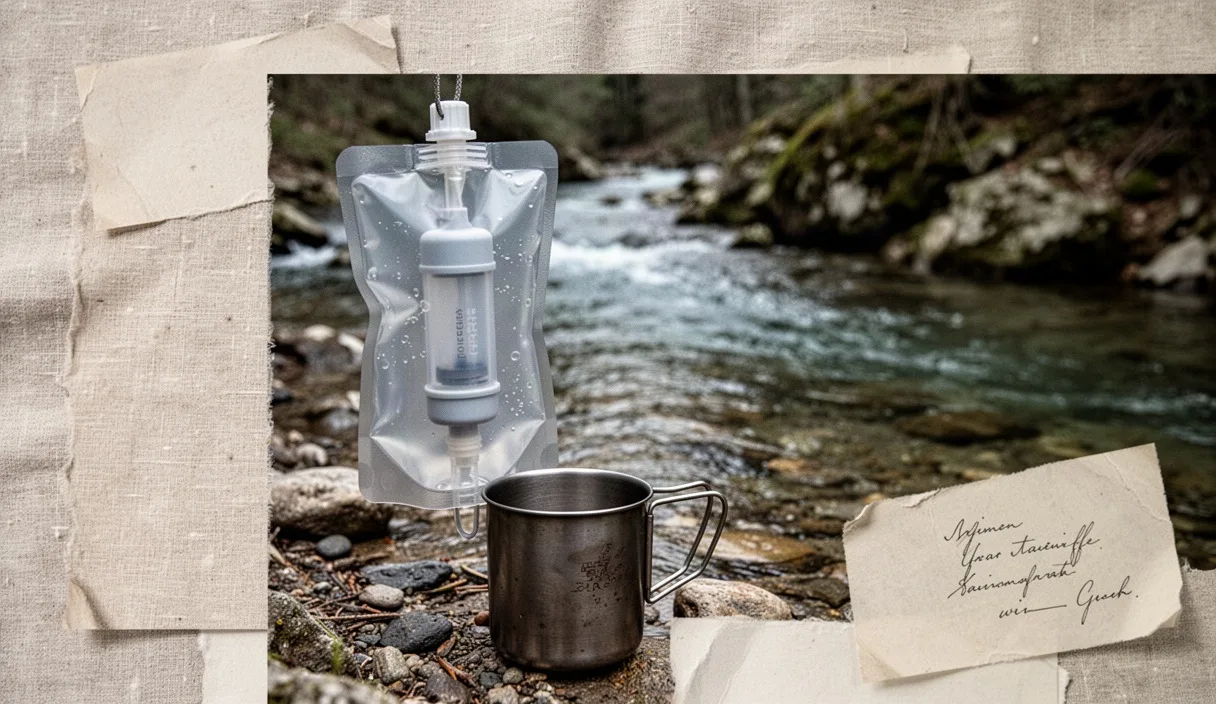
Hollow-fiber cartridges dominate modern backpacking gear lists. Models like the Sawyer Squeeze, Platypus QuickDraw, and Katadyn BeFree use hundreds of tiny, straw-like capillary tubes bundled together inside a plastic housing. The walls of these microscopic tubes contain micropores, typically 0.1 or 0.2 microns in diameter. Water is forced under pressure through the outside wall of the fibers and exits through the hollow centers as clean output. The physical nature of the process means treated water is ready to drink the second it passes through the matrix.
Flow rates run high on day one, often exceeding 1.5 liters per minute with clean glacial melt or clear alpine lake water. Suspended sediment, glacial flour, and tannic organic tea change those figures rapidly. Glacial silt contains tiny mineral shards that wedge into the exterior fiber pores, while decaying pine needles deposit colloidal tannins that coat the membrane surface. A filter that runs freely at breakfast can choke down to a drop-by-drop trickle by nightfall if drawn from poor sources.
Field maintenance keeps hollow fibers functioning across multiple days. If you face turbid water, execute these field actions to preserve flow:
- Pre-settle turbid water in a collapsible bladder for 45 minutes, decanting only the clarified upper layer into your squeeze bag.
- Pass raw water through a clean cotton bandana or a paper coffee filter strapped over your collection bottle to catch coarse organic grit before it contacts the cartridge.
- Perform a forceful backflush using the supplied cleaning plunger or a dedicated sports-cap bottle whenever the output drops below 0.75 liters per minute. Use clean, filtered water only for this backwash process.
- Avoid striking or dropping the plastic housing against hard rocks, which can fracture internal potting material and allow contaminated water to bypass the fibers entirely.
Assess Chemical Contact Times for Tablets
Chemical purification relies on contact time, concentration, and temperature. Field tablets generally come in two chemistry types: sodium dichloroisocyanurate (NaDCC, a concentrated chlorine donor) and chlorine dioxide (ClO2). NaDCC treats bacteria, viruses, and Giardia quickly, but it fails to penetrate the protective outer wall of Cryptosporidium oocysts at standard field doses. Chlorine dioxide acts as a broad-spectrum dissolved gas oxidizer that penetrates the cyst wall, neutralizing all three major biological classes when given adequate time.
Water temperature dictates the reaction speed. In cold runoff measuring 4 to 8 degrees Celsius, molecular motion slows drastically. The chemical reactions that destroy pathogen cell membranes require substantially more contact time to complete. If you drop a tablet into alpine snowmelt and drink after 15 minutes, you consume active cysts. For chlorine dioxide, destroying Giardia in warm 20-degree water requires roughly 15 to 30 minutes, whereas water near freezing demands 45 to 60 minutes. Destroying Cryptosporidium oocysts requires a full 4-hour dwell time regardless of tablet brand, though near-freezing conditions warrant leaving the container overnight.
Sediment also interferes with chemical action. Turbidity consumes the reactive oxidizer before it can neutralize target bacteria. Decant or filter dirty water before dropping a tablet, or the chemical dose will bind with inert organic debris and leave living microbes behind in the container. Keep tablet blister packs intact until the precise moment of use, as ambient humidity degrades unprotected sodium chlorite and bisulfate reagents within days.
Protect Ceramic and Fiber Cores from Freezing
Freezing temperatures ruin mechanical filters silently and irreversibly. Water expands roughly 9 percent by volume when it freezes into ice crystals. Inside a wet hollow-fiber or ceramic filter cartridge, water remains trapped inside the microscopic pore channels long after you finish pumping. When that trapped moisture freezes, the expansion tears the micropores open, enlarging 0.1-micron openings into 10-micron or 20-micron ruptures. The outer housing does not crack, the plastic remains intact, and the flow rate may even appear faster the following morning, but the unit no longer blocks bacteria or protozoa.
Unlike ceramic disc units that occasionally survive light air exposure if thoroughly shaken dry, modern hollow-fiber bundles cannot be blown completely dry in the field. Capillary tension holds liquid within the fibers permanently once wetted. If overnight forecasts drop below 2 degrees Celsius, you must treat your wet filter as critical life-support gear and keep it protected from sub-zero air exposure.
Follow these specific cold-weather handling procedures to prevent core destruction:
- Stow the filter cartridge inside a zip-top plastic bag and slide it directly into an inner jacket pocket during daytime hikes across snowpack or frozen terrain.
- Sleep with the sealed filter inside your sleeping bag footbox or against your chest on frosty nights; never leave it in a tent vestibule, pack pocket, or vehicle glovebox.
- Discard any hollow-fiber filter that has undergone a known hard freeze. Most retail units offer no reliable field-integrity test to confirm that microscopic membrane walls remain unbroken.
- If you run winter expeditions with persistent sub-zero daytime temperatures, switch entirely to boiling or chemical treatment to eliminate freeze failure risks.
Build a Lightweight Redundant System
Carrying a single treatment method creates an unnecessary point of failure. A dropped filter can shatter on granite, an internal gasket can tear, or fine silts can clog a fiber element past the point of field cleaning. Conversely, relying solely on tablets means waiting hours to drink when arriving dehydrated at camp, and drinking suspended mud because tablets do nothing to address water clarity. The optimal strategy merges both approaches into a tiered system weighing under 140 grams total.
Assign the primary duty to a high-flow 0.1-micron squeeze filter. This provides fast, grit-free water for active hydration along the trail, letting you fill water bottles and drink immediately. Assign the secondary role to individually foil-wrapped chlorine dioxide tablets tucked into your repair kit or first-aid roll. Tablets weigh virtually nothing, take up zero pack volume, and do not care if they freeze during an unexpected cold snap.
Turbid, suspect water requires an integrated two-step protocol. Collect the water, run it through the mechanical filter to eliminate mud, organic particulate, and protozoan cysts, and then drop a chemical tablet into the clean container to eliminate possible viral contaminants. This layered workflow is particularly valuable when gathering water downstream from active cattle grazing, near popular pack-animal trails, or across developing international destinations where human fecal contamination occurs in municipal watersheds.
Common Mistakes
Backpackers regularly compromise clean water routines through basic procedural slips. Avoid these recurring mistakes:
- Cross-contaminating bottle threads: Dipping a narrow-mouth bottle directly into a creek submerges the threaded neck in raw water. Screwing a clean drinking cap onto contaminated exterior threads transfers live microbes directly to your lips. Always dry threads thoroughly with a designated bandanna before drinking.
- Ignoring manufacturer shelf lives: Liquid chlorine dioxide components and unpacked iodine solutions lose chemical potency over time. Replace liquid dropper kits every season and discard blister strips past their stamped expiration dates.
- Squeezing collection bags with excessive force: Applying full body weight to a clogged squeeze pouch creates extreme hydraulic pressure, blowing out the seams of the dirty bag or cracking the internal adhesive seals inside the filter module. Backflush the unit instead of forcing the flow.
- Neglecting post-season storage protocols: Putting away a wet filter in a dark gear closet invites mold, mildew, and anaerobic bacterial growth inside the hollow fibers. Flush filters with chlorine-treated tap water, dry according to manufacturer guidelines, and store in a temperature-regulated closet.
Next Steps for the Trail
Inspect your water kit before heading out on your next trip. Check the blister packaging of your chemical tablets to ensure the foil remains airtight with no punctures or soft spots. Check your squeeze filter by filling a bag with tap water and measuring the baseline flow rate. If a liter takes longer than 90 seconds to pass through under light hand pressure, run a thorough backflush cycle at home using warm, unchlorinated water or a mild bleach dilution as specified in your user manual.
Map your water sources along the upcoming route. Research whether you will encounter high-turbidity glacial runoffs, low-flow stagnant pools, or pristine spring outlets. Pack a clean 20-centimeter square piece of synthetic mesh or a bandana to handle initial sediment screening. If traveling through remote international terrain or areas with documented sewage overflows, consult local public health authorities or a travel medicine clinician regarding regional viral profiles and specific sanitation guidelines. Keep your filtration hardware accessible at the top of your pack, never at the bottom, so you treat water methodically rather than skipping stops out of convenience.